This two-day seminar offers an examination of current practice with regard to the PCT system for patent professionals. A half-day session will focus on an overview of the PCT system, the most recent and future developments in the PCT system as well as covering some of the most important strategic decisions that need to be taken when using the PCT system. This will be followed by a day and a half looking at a detailed analysis of the PCT system, covering best practices and sophisticated tips about the procedural aspects of the PCT.
Co-Sponsors: World Intellectual Property Organization (WIPO) and Bloomberg Law
European Patent Practice (EPP)
An IP seminar focused on current and practice-relevant information for those dealing with European intellectual property rights. This highly successful and intensive program on European Patent Practice has been off ered for over two decades in coorporation with the IP Law Firm of KUHNEN & WACKER, and has been extremely well received by attendees.
When: Tuesday, November 1 to Wednesday, November 2
CLE: Up to 12.75 hrs including ethics (approval pending)
These seminars are open to all patent professionals and attorneys. For your convenience, attached are copies of the informational sheets on both the PCT Seminar (October 20-21) and EPP Seminar (November 1-2).
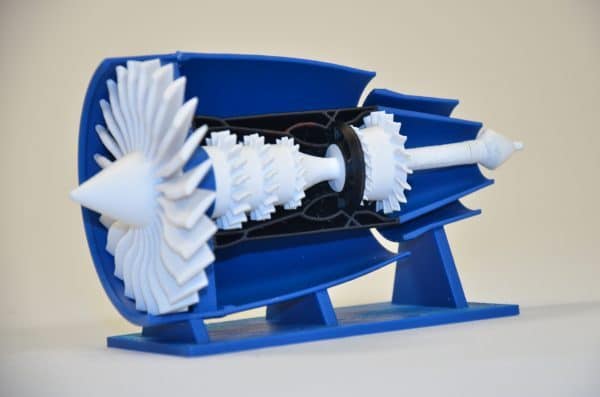
The U.S. Patent and Trademark Office (USPTO) will host a public conference on the legal and policy considerations of intellectual property (IP) in 3D printing on Tuesday, June 28, 2016 at USPTO Headquarters in Alexandria, Virginia.
3D printing, or additive manufacturing, is a process of making three-dimensional solid objects from a digital model. 3D printing is used in the fields of jewelry, footwear, architecture, engineering and construction, automotive, aerospace, dental and medical industries, education, geographic information systems, civil engineering, and many others.
Join the conference to hear some of the leading voices in the field of IP and 3D printing discuss IP law and policy in the context of this rapidly-evolving technology.
Speakers include Paul Banwatt, COO and general counsel at Matter and Form and main contributor for the 3D printing law blog “Law in the Making,” John Hornick, a partner in Finnegan IP and author of “3D Printing Will Rock the World,” and Michael Weinberg, general counsel at Shapeways and author of “It Will Be Awesome If They Don’t Screw It Up: 3D Printing, Intellectual Property, and the Fight Over the Next Great Disruptive Technology.”
Application for 4.0 general Virginia CLEs credits is currently pending.
There is no fee to register, but space is limited.
From a field of more than 2,000 potential nominees, Patent Baristas has received enough nominations to join the 250 legal blogs participating in one of the largest competitions for legal blog writing online today.
Now that the blogs have been nominated and placed into their respective categories, it is up to their readers to select the very best. The process allows participants one vote per blog. Each blog will compete for rank within its category, while the three blogs that receive the most votes in any category will be crowned overall winners.
The competition will run from August 27th until the close of voting at 12:00 AM on October 9th, at which point the votes will be tallied and the winners announced.
The USPTO AIR is a new online interview scheduling tool that allows Applicants to request an interview with an Examiner for their pending patent application.
This is the type of 21st Century Government we’ve all been longing for. You can fill out a very quick, simple form, propose a time and day for an interview with the examiner, digitally sign and you’re done. Beautiful!
On September 8, a group of more than 100 national and state-based advocacy organizations sent a letter to the House and Senate Judiciary Committees urging Congress to amend H.R. 9 to preserve protections of the Hatch-Waxman Act and to avoid weakening the patents that sustain medical research.
In the letter, advocates argue that the Innovation Act does little to address current abuses in the Inter Partes Review (IPR) process that threaten the Drug Price Competition and Patent Term Restoration Act (the Hatch-Waxman Act) and the Biologics Price Competition and Innovation Act (BPCIA).
According to the letter:
The Inter Partes Review (IPR) proceedings were intended to be a more efficient way to address patent challenges, but IPR opened the door to abuses that threaten the unique and specialized mechanisms under the Drug Price Competition and Patent Term Restoration Act (commonly referred to as the Hatch-Waxman Act) and the Biologics Price Competition and Innovation Act (BPCIA). Congress established these carefully-crafted patent dispute resolution frameworks to balance the interests of innovators, generic and biosimilar manufacturers, and, most importantly, the individuals waiting for a treatment or cure. This system generally works well. Many generic medications are entering the market while, at the same time, innovative R&D is delivering new treatments to patients. These trends are helping individuals with chronic and complex conditions live longer, healthier lives.
The letter goes on to state:
Congress never intended for the IPR proceedings to undermine the patent dispute resolution frameworks in Hatch-Waxman and BPCIA. We urge Congress to include language in H.R. 9 that would preserve the highly-detailed and sophisticated systems designed by Hatch-Waxman and BPCIA to avoid weakening the patents that sustain medical research. Strong patents will ensure that innovative ideas make it from the lab to the people who need them most.
A new film, tentatively entitled ‘TROLLS‘, is currently in pre-production and into fundraising on Indiegogo. Apparently, the film is a feature length comedy (comedy? really?) about start-ups, crowdfunding, and patent trolls.
Understandably, the working title of Patent Assertion Entities! was probably not such a great idea. Whether or not you believe that patent trolls are (quote) an ugly, stinky zit on the face of the American legal system (unquote), I have to applaud their moxie.
From Indiegogo:
Filmmakers in Austin, TX are using crowdfunding to bring their new comedy film to life. ‘TROLLS’ will tell the story of one tech start-up that’s ruined by a patent troll, but figures out a creative way to fight back!
Lex Lybrand, the writer/director of the new feature comedy film, writes:
I wrote the script after months of research that included getting first-hand accounts from residents of Marshall, TX, stories from entrepreneurs that have been (or are still being) sued, and stories from the various podcasts that have been involved with trolls in the last few years. I’m hoping to shine a bright light on the ridiculousness of this whole industry with this film.
Enter, Trolls.
According to the press release:
Trolls tells the (fictional) story of a tech start-up in Austin, TX that invents an amazing new product — the NeverCharge Battery. Their device uses a combination of magnets & wireless charging to instantly bring any cell phone battery to a full charge… forever. Naturally, their invention takes the world by storm & they shatter every crowdfunding record. Everything is great until they’re served with a lawsuit by a patent troll. They lose everything when a shady judge in Marshall, TX uses an even shadier interpretation of an outdated intellectual property law to enforce a patent that the troll owns.
This sounds absurd, but it happens every day.
Trolls aims to bring this issue to an even wider audience, and Lybrand hopes his satirical profile of the industry will help move Congress in the right direction. “I can’t do anything about it, legally… But maybe if I make fun of it then somebody who can do something about it will do something about it.”
ADVISORY (13Jun2015) USPTO Announces Enhancements to Private PAIR
Beginning on June 13, 2015, users will notice several new Private PAIR features that will allow users to self-administer a number of routine administrative tasks that previously required the submission of a paper form. These requests will be processed immediately. The enhancements include the ability to submit entity status changes, create new customer numbers, submit correspondence and/or maintenance fee address changes, and view saved or submitted requests. The Address & Attorney/Agent tab has also been enhanced to include complete information for correspondence address, maintenance fee address and power of attorney information.
Upon searching an application that is associated to your customer number, an “Update” link will made available on the Application Data tab next to the Entity Status allowing you to submit a request to change the entity status of the application. A record of the entity status change will be added to the Image File Wrapper and an entry will be added to the Transaction History tab. Users may notice that all applications are set to Regular Undiscounted entity status by default upon initial filing until the application completes formalities review. Once this review is complete, the entity status will be updated based on any assertion of small or micro entity status. For more information, please refer to the Entity Status Quick Start Guide linked below.
Found under the “PAIR Administration” menu, users will now have the ability to create a new customer number. Users will be able to enter address information, choose the preferred method of outgoing correspondence (Mail, e-Mail). Additionally, registered practitioners will be able to associate additional attorneys or agents to the customer number. For more information, please refer to the Create New Customer Number Quick Start Guide linked below.
Found under the “PAIR Administration” menu, users will now have the ability to update the correspondence and/or maintenance fee address of up to 20 application/patent numbers. Requests must be submitted by the Attorney or Agent of record who has been given power of attorney in the application. At this time, Private PAIR address changes are only available to registered practitioners. Other users will still need to submit address change requests through existing methods. For more information, please refer to the Update Application Address Quick Start Guide linked below.
Found under the “PAIR Administration” menu, users will also be able to view previously saved and completed entity status change, new customer number, and address change requests. Saved requests will be available for up to seven days and submitted requests will be available for up to the past 90 days.
Address & Attorney/Agent tab
The Address & Attorney/Agent tab has been enhanced to include complete correspondence address, maintenance fee address and power of attorney information. Links have been added to the top of the page for each type. Each page will include the address, customer number and attorney/agent information that is associated to the given application. If information is not available, data will not be displayed on the page.
Today we talk with Matt Cutler, a principal at Harness Dickey, about the Protecting American Talent and Entrepreneurship Act (PATENT Act) of 2015. The 55-page PATENT Act is an attempt to make reforms to stop abusive patent litigation practices. It is the first patent reform bill to have bipartisan support. (See the contents of S. 1137 here.)
Patent Baristas: You are currently with Harness Dickey specializing in intellectual property litigation and Inter Partes Review and Post-Grant Review proceedings before the Patent Trial and Appeal Board at the USPTO. Can you tell me a little about yourself and how you got involved with these proceedings?
Matt Cutler: Stephen, thank you for the opportunity to tell you about myself and what I do. I am a Chicago Cubs fan trying to survive in enemy Cardinals territory down here in St. Louis. I came to town over 20 years ago to attend Washington University School of Law and stayed. As a registered patent attorney focused primarily on patent litigation, the first whispers of inter partes review proceedings intrigued me – a perfect intersection between patent prosecution and litigation. I started following the legislative and rules debate and, ultimately, when the rules were finalized, I began traveling the country to spread the news of the coming tidal wave. I knew IPR would be popular, but who could have predicted the extent to which it has fundamentally changed patent litigation?
Baristas: First off, I have to ask the question: do you think that we really need any further reforms of the U.S. patent system?
Cutler: I do believe that there is room for improvement in several of the provisions of the AIA. That was such a sweeping law, so there were bound to be areas that missed the mark, even if only slightly. The pending bills contain many more sweeping reforms, but I am of the belief that these are just starting points in a negotiation and more incremental change will ultimately be enacted. With tech companies on one side of the debate and bio/pharma companies on the other, I believe it is likely that any changes will be part of a compromise deal that will hopefully address the important issues facing each industry.
Baristas: The Senate Judiciary Committee has moved on the Protecting American Talent and Entrepreneurship Act of 2015 (PATENT) Act. The Act appears to be in better condition after the last revision and seems to have a good chance of being enacted. Is that a good thing? Who will be the losers?
Cutler: The PATENT Act is a multi-faceted effort to reign in the improper litigation behavior engaged in by some non-practicing entities. The concern, of course, is making litigation so difficult that legitimate claims cannot be pursued. Many of the provisions of the Act, however, are aimed at increasing transparency earlier in litigation. Positions such as identifying the claims at issue, accused products, etc. are all concepts that emerge fairly early on in the litigation process anyway. By having that disclosure up front, it increases the odds that only the truly grounded infringement claims will be pursued, not frivolous claims whereby an entity is trying to leverage the litigation process to obtain nuisance payments.
Baristas: The PATENT Act has heightened pleading and transparency requirements, including specific information about which patents and claims are being infringed, what product is infringing, and how. That all sounds reasonable. But, the Act also includes additional requirements about what parties have a financial interest in the outcome of the case, as well as every complaint from the three-year period beforehand. How does this make anything better? Doesn’t this just serve to act to harass the plaintiff?
Cutler: There are many intersecting factors that impact the issue of whether so-called “transparency” is necessary at the outset of litigation. On the one hand, by constructing a web of shell companies, the true entity that is driving what ultimately is determined to be frivolous litigation can avoid accountability. In essence, this is the check necessary to ensure that existing and any increased penalties for frivolous litigation actually can be recovered. Also, transparency will help to ensure that standing and real-parties-in-interest are identified.
On the other hand, such disclosures are often best handled in a discovery context where protective orders can protect sensitive information. In the end, these requirements will increase the transactional costs of filing complaints. Maybe that is the point, but it would seem that companies bringing legitimate litigation, non-practicing entity or not, would be able to fairly quickly make these disclosures. For bio/pharma companies, for example, there is typically going to be a fairly straightforward patent ownership path and easily-identifiable patent complaints over a three-year period. This seems like one of the provisions on which the bio/pharma industry could concede (recognizing that transactional costs will rise) in exchange for something else that is important to the industry.
Baristas: The bill precludes a plaintiff from relying on pre-suit demand letters to establish willful infringement if the letters do not specify the asserted patent, the accused product, the plaintiff’s ultimate parent entity, and the grounds for the alleged infringement. How does that differ from the requirements already in place?
Cutler: Under the current state of the law regarding willful infringement, a patent holder must prove that the defendant knew or should have known the risk of infringement. Demand letters have often been used to establish notice of the patent and can later be used to prove that the defendant acted with subjective recklessness. There have been, to date, no requirements regarding what, specifically, those letters must contain. The provisions of the PATENT Act that relate to the information that must be contained in a pre-suit demand letter would be the new cost to enable a patent owner to use such letters to serve as notice regarding willfulness.
Baristas: Does knowing the “parent entity” change whether or not there’s been notice of infringement? Couldn’t a court decide if the notice is enough “notice”?
Cutler: Under the current law, the courts do decide whether adequate notice has been provided as part of the inquiry into the subjective reasonableness of the infringer’s actions. Of course, whether the “parent entity” is known or not does not impact true “notice.” The proposed law contains a trade-off – use of the notice letter is forbidden as evidence of knowledge of the potential infringement unless an unrelated goal of “transparency” is furthered by requiring the listing of the “parent entity.”
Baristas: The PATENT Act requires an award of attorneys’ fees to the prevailing party if the court finds that the losing party’s position was “not objectively reasonable in law or fact” or the losing party’s conduct was “not objectively reasonable.” The bill also allows recovery of fees from third parties with a “substantial financial interest” in the patent. Why special treatment for a lawsuit that happens to involve a patent versus a suit involving any other Why should third parties with a “substantial financial interest” be on the hook for anything when our system doesn’t provide this type of special recovery for other matters?
Cutler: You have put your finger on the reason why there has been such opposition to fee-shifting in patent cases. That is, the trial bar is uninterested in letting the camel get his nose under the tent, so to speak, by heading down a slippery slope where introduction of fee-shifting in patent cases leads to fee-shifting in other areas of the law. Proponents of tort reform, on the other hand, are getting behind this aspect of patent reform for the opposite reason – gaining a foothold in the patent arena will be a launching point for more broad-based fee-shifting efforts. Answering your question more directly, proponents of this provision are of the opinion that more liberal shifting of attorney fees against losing parties would reduce nuisance lawsuits and make it more economically feasible for defendants to challenge patents because they will have a greater opportunity to recoup their attorney fees. Reiterating a point we discussed earlier, however, maybe enough has already been done in this area with the Supreme Court’s recent fee-shifting decisions, including in Octane Fitness. I served as lead counsel on behalf of Octane Fitness in the district court portion of that case. I have, of course, been watching this issue very closely and perhaps we should let the post-Octane case law continue to develop before we make additional significant legislative changes.
Baristas: The Act would allow suits against customers to be stayed if a manufacturer is also involved in federal court litigation. Again, what makes patent litigation so different that there needs to be this additional element?
Cutler: There probably is not a single patent owner who has not considered the impact litigation may have on the customer of its litigation rival. Simply, pulling a customer into litigation is a high-leverage move that makes it more likely that a defendant will pay more to get out of the litigation sooner. In fact, in most cases, the customer really has nothing to do with the accused product, except as a retailer or end user. And, of course, the patent owner can only recover damages one time. On the flip side, in legitimate cases, it sometimes makes sense to bring a customer into the litigation because the damage base might be larger, among other considerations. As such, the concept of a customer stay makes sense for many situations where the party involved is just a bystander to the main act. As that provision stands, however, it may be overly broad because this is not a one size fits all type of provision. For example, as written, the customer stay provision will exempt all parties downstream from the maker of the first component part, including large manufacturers that are combining numerous components into a completed device. In these cases, the downstream customer is not merely a retailer or end user. More work likely needs to be done to make this provision acceptable to all stakeholders involved.
Baristas: Are any of these provisions going to come back to bite the very companies pushing for these changes?
Cutler: The pendulum always seems to swing too far, doesn’t it? Ever since this new wave of patent reform has gained momentum, I have been predicting that the very companies that are pushing so hard to ensure sweeping enactment will find that it has gone too far. Either they will find their own patent portfolios devalued or unenforceable or, given how our economy is increasingly knowledge-based, there will be less demand for their products due to an erosion of the fundamentals of that economy. Changes may be necessary, but without surgical precision, the pendulum might turn into a wrecking ball.
Baristas: I have to ask, what are your feelings about the Cincinnati Reds?
Cutler: The National League Central Division has the best, most knowledgeable fans in baseball. As a fan of a team that has suffered through mediocrity for well-over 100 years, that’s about the most trash-talking I am allowed.
Baristas: Thank you for your time today.
—————-
Matt Cutler’s specialties include intellectual property litigation and Inter Partes Review and Post-Grant Review proceedings before the Patent Trial and Appeal Board at the U.S. Patent and Trademark Office. Matt has a website www.IPR-PGR.comdedicated to issues surrounding these Patent Office procedures.
Editor-in-Chief Barista Stephen Jenei is a patent attorney and Owner of Jenei LLC. When not serving up patent chat over a steaming cup of java, he's handling a diverse intellectual property practice in the biotechnology, pharmaceutical and chemical fields. More info @ Jenei LLC